
Pelvic Floor Physio
for all ages and stages
1 in 3 women develop a pelvic floor disorder during her lifetime. Don’t suffer in silence or just think it’s normal. Pelvic floor disorders can be a major barrier to exercise and to quality of life. There is is a wide range of therapies that is not just pelvic floor muscle training.
Physiotherapy can also include treatment for:
- painful sex (dyspareunia)
- overactive bladder or urgency
- Bladder Pain Syndrome
- frequency of urinating
- incontinence leaking (urine and faecal)
- prolapse
- post radiation therapy for cancers
- constipation
- weak or overactive pelvic floors
To be clear – being able to coordinate your pelvic floor to lift up, hold on and let go is important for normal function of the pelvis, for support of the organs, for continence and for better sensation and sexual function.
However it is not the only therapy involved in pelvic floor physiotherapy.
Other treatment modalities may include:
- TTNS / TENS / stimulation
- Scheduled voiding
- Lubricant education
- Defecation positioning
- Constipation education and advice
- Biofeedback for the pelvic floor
- Pessary and other intra-vaginal device fitting
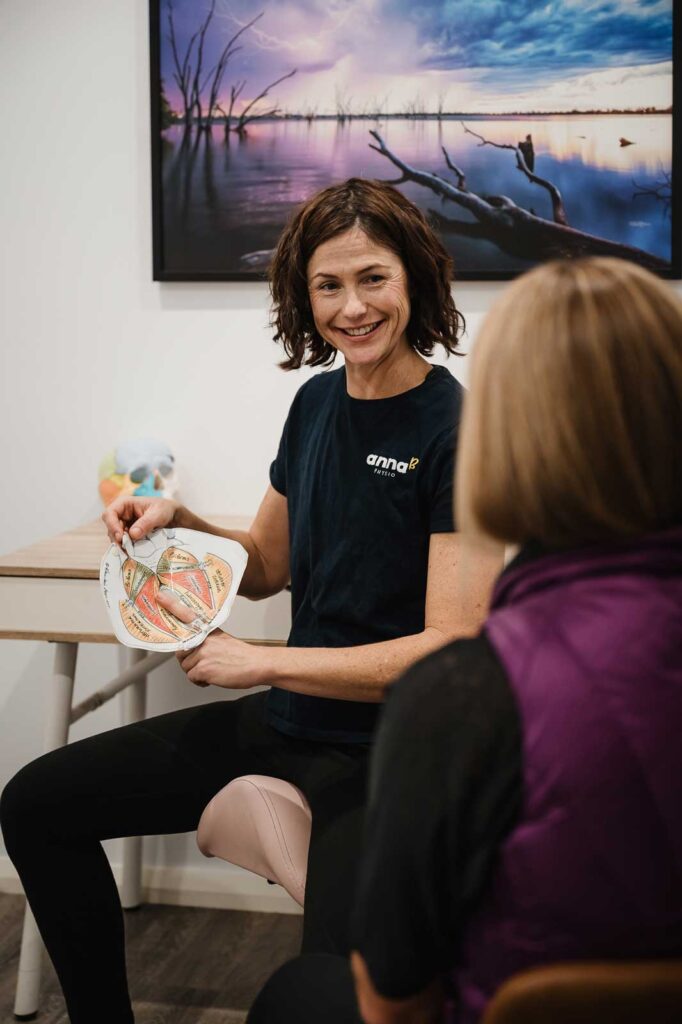
A note on prolapse….
Prolapse is common in women but doesn’t need to be a barrier to movement or enjoying your life.
There often are options as well as surgery and in many cases physiotherapy can help enlighten on the best lifestyle behaviours and activities that may help it getting worse.
Pessaries are a conservative (non-surgical option). Pessaries are silicone devices used to insert inside the vagina essentially to offer support or scaffolding to the vaginal walls. Anna is trained in fitting pessaries and has a limited stock in the clinic.