
Scar Therapy
I am a certified ‘Restore Scar Therapist’ and ‘C-Section Scar Specialist’.
Sometimes in life we find ourselves with a scar- whether it be from a planned or emergency surgery, or from an accident or injury. Scars have different stages of healing and different presentations dependent on a number of factors such as hydration, infection, genetics, strain on the scar, autoimmune conditions etc.
The earlier we address a scar in its healing journey the bigger impact we may have on it on preventing scar tissue to thicken, and promoting the scar to heal in a functional way. Hydration is a huge factor early on in the piece and once assessed we can determine what is the best course of action for your scar.
Contrary to what we assume – a keyhole scar may still create as much issue as a large incision line. Due to adhesions that may occur below the scar, whether the scar be large or small – it can cause not only pain but also movement dysfunction locally and sometimes further up or down the chain in the body.
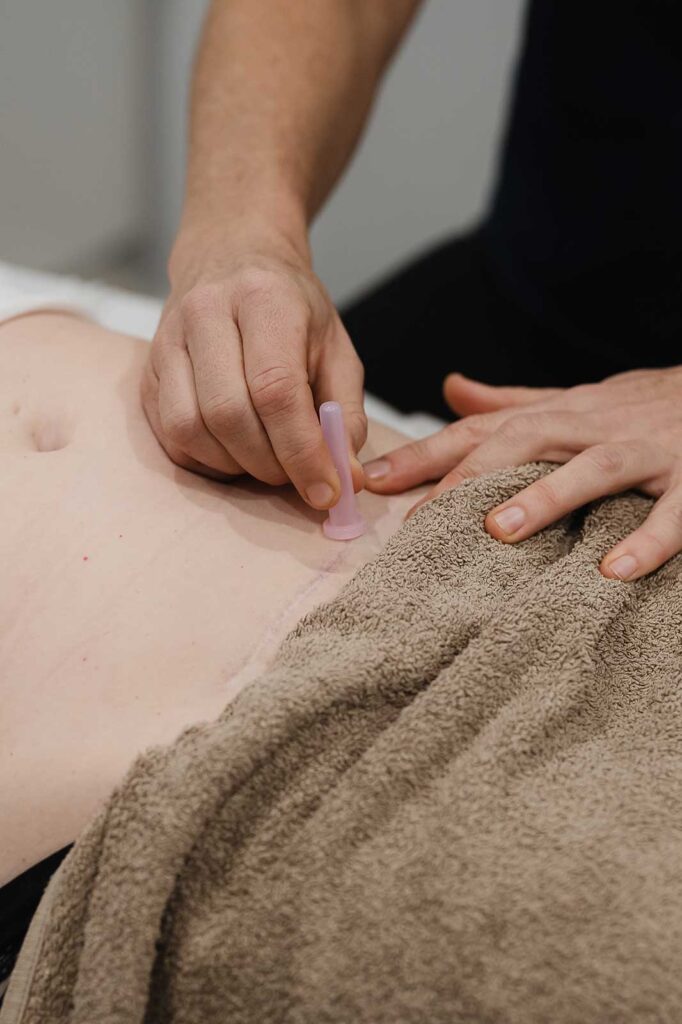
Signs your scar may need a little TLC / Scar therapy:
- Reduced mobility of the scar/ tightness / adhesions
- Thickening of the scar
- Discomfort
- Swelling around the scar (eg a ‘shelf’ above a C-scar)
- Numbness/ altered sensitivity
- Joint of muscle pain above or below the scar site (not necessarily nearby either)
- Altered movement patterns relating to your injury / how you got the scar
Dependent where along in its healing journey your scar is, there are a number of treatment options that may include:
- Gentle manual techniques
- Gentle Fascial cupping
- Compression therapies including silicone
- Education and advice on hydration methods for scars
- Taping
- Movement
Once your scar is assessed we can also work on some simple techniques and/or methods for home to optimise your scar healing.
Please get in touch today to book your scar assessment. This can also be done within a regular physiotherapy session!